
 During a mountain holiday retreat, one of the first things that catches your eye is the scenery. Nothing beats the sight of treetops, clouds, or peaks when you’re several feet from sea level. So, what do you? You take photos, of course!
But taking crisp pictures of the scenery before you isn’t as easy as you think. There are techniques for getting striking photos, especially of the outdoors. Interested to learn more? Then, keep reading for some photography tips.
Preparing for Your Trip
A professional photographer researches their destination to understand its terrain, from jagged peaks to serene lakes. Different seasons offer unique opportunities – spring is alive with wildflowers, while autumn drapes the mountains in rich, warm colours.
Mountain weather changes in the blink of an eye. So, checking the forecast helps you plan for these dramatic shifts that can transform your photos. If you expect fair weather in your destination, book your serene retreat in the mountains as soon as possible. Nearby comfy accommodations will provide shelter should a sudden downpour happen. A place with modern amenities will also be helpful after a long day of mountain photography.
Pack the right equipment for your mountain holiday, too! Bring various lenses and a sturdy tripod for long exposures. While DSLR and mirrorless cameras deliver outstanding image quality, smartphones have become strong contenders for convenience. According to one survey, 64% of professional photographers use their phones to take half of their personal photos. (1)
Be Mindful of the Composition
A great photo isn’t just about pointing and shooting; how you frame your shot also makes a difference. The rule of thirds brings balance to your shots. It’s a classic technique that creates eye-catching compositions. Divide the frame into nine equal parts and align key elements along these lines to create visually appealing compositions. For example, place the horizon on the upper or lower third of the frame rather than the centre to add depth.
Incorporating leading lines is another way to elevate your shots. Paths, rivers, and ridgelines do more than catch your eye; they tell stories through your photos. Strategically let your camera follow a winding trail to a peak or trace a river’s journey to a lake.
Natural frames add magic to mountain photography. Those overhanging branches and unique rock formations draw attention to your subject and give viewers a sense of just how grand these landscapes are. Want to play with perspective? Getting low to the ground can make mountains tower even higher, while shooting from above reveals the sweeping scale of the terrain.
This mindful attention to the visual appeal of your photos manifests not just in your outputs but also in your overall well-being. In fact, research suggests that mindful photography can boost your mood, memory, and life satisfaction. (2)
Consider Proper Lighting
Lighting can make or break your mountain photography, so take your mountain holiday photos at the right time. Golden hour bathes the scene shortly after sunrise or before sunset in warm, soft light that enhances colours and textures. Blue hour is that dreamy, soft light just before sunrise or after sunset, great for atmospheric shots. Plan your outings to coincide with these times for the best natural lighting.
The harsh midday sun can be tricky with its strong shadows and washed-out details. The solution? Hunt for shaded spots, or try positioning the sun behind your subject for softer lighting. Overcast skies, on the other hand, offer a surprising advantage. The even lighting reduces sharp contrasts, making colours appear more vibrant.
 Apply Capturing Techniques for Mountain Landscapes
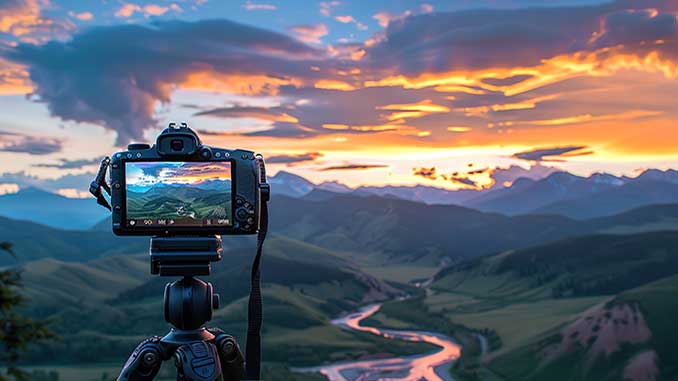
Photographing landscapes is quite different from taking headshots. Long exposures turn rushing waterfalls into silk and make clouds dance across the sky. To achieve the desired effect, start with a slow shutter speed, a small aperture, and low ISO settings.
Macro photography reveals hidden details in your mountain retreat – delicate alpine flowers, intricate tree bark patterns, and tiny mountain creatures. Pop on a macro lens or extension tube for crystal-clear close-ups. For wildlife photography, patience is your best tool. Quietly observing animals in their natural habitat allows you to capture candid moments. Wildlife photography demands space and respect.
Keeping your distance protects you and the animals. Ethically taken wildlife photos may also be beneficial to conservation as they help you build an engagement with biodiversity. And through your photos, you can raise awareness of how crucial preservation is. That being said, you can only achieve that by using the right capturing techniques. (3)
Enhance it in Post-Processing
Even your best mountain holiday photos benefit from some fine-tuning. Editing software like Adobe Lightroom or free alternatives such as GIMP can bring your images to life.
Begin with basic adjustments to exposure, contrast, and colour balance, refining your photos to match the scene you experienced. A thoughtful crop also transforms an ordinary shot into something extraordinary by putting all eyes on your subject.
Sky and foreground adjustments bring out the best in landscape photos. Bracketing or taking multiple exposures of the same scene also helps handle challenging light conditions. But do so sparingly. Post-processing should always enhance the image without losing its authenticity.
Wrapping Up
A mountain holiday provides endless opportunities for stunning photography. With ample preparation and practice, your photos will turn out fantastic and spark nostalgia. Pack your camera and hit those mountain trails – every shot adds another chapter to your story.
References:
- Do Pro Photographers Use Camera Phones?
Source: www.statista.com - Capturing life or missing it: How mindful photo-taking can affect experiences
Source: www.sciencedirect.com - Cameras for conservation: wildlife photography and emotional engagement with biodiversity and nature Source: www.tandfonline.com